

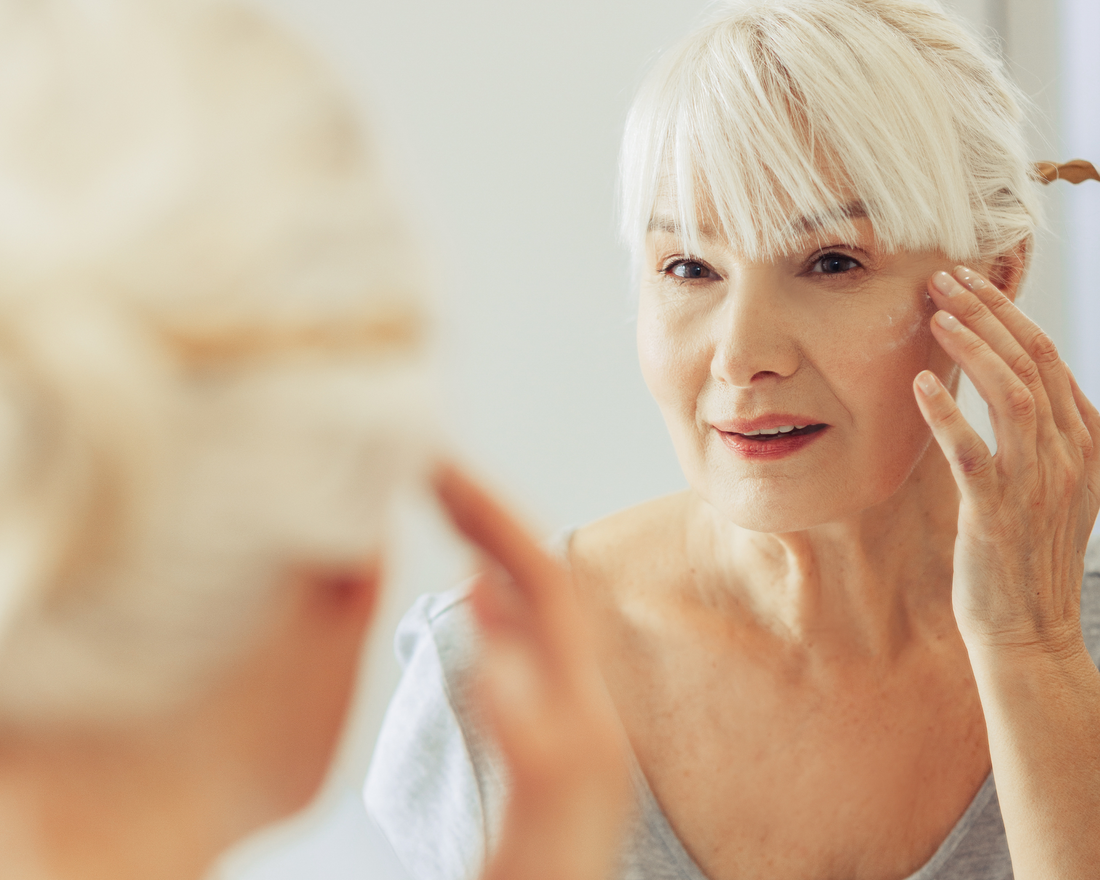
Skin care during menopause
Introduction
Menopause, a natural transition in the life of all women, brings many challenges, particularly for the skin. These skin changes can be complex and disconcerting without the proper knowledge and care. Here is a comprehensive and detailed guide to help you understand and care for your skin during this crucial stage.
Menopause, a natural stage in a woman's life, presents many obstacles, particularly for the skin. Without the proper knowledge and care, these skin changes can be complex and disconcerting. Here you will find a complete, step-by-step guide to help you understand and care for your skin during this crucial step in your skincare process.
Understanding skin changes during menopause
-
Hormones and the skin
Estrogen: Reducing this hormone decreases the skin's ability to retain moisture, which can lead to dryness and itching.
Progesterone: Its decline can also contribute to dry skin.
Testosterone: It remains relatively constant, which can cause increased sebum production, leading to oilier skin.
Estrogen: Decreases in this hormone reduce the skin's ability to retain moisture, which can lead to itching and dryness.
Progesterone: Decreased progesterone can also contribute to dry skin.
Testosterone: It remains relatively constant, which can lead to greater sebum production and therefore oilier skin.
-
Collagen and elastin
Loss of Collagen: This leads to a reduction in skin firmness.
Loss of Elastin: The skin becomes less elastic, contributing to the formation of fine lines and wrinkles.
-
Other effects
Age spots: Often due to previous exposure to the sun, they can become more visible.
Increased sensitivity: The skin may react more strongly to skincare products and environmental conditions.
Loss of collagen: the skin is less firm.
Loss of elastin: The skin becomes less elastic, which contributes to the formation of fine lines and wrinkles.
-
Additional effects
Age spots: These may become more visible due to previous exposure to the sun.
Increased awareness: The skin may react more intensely to skincare products and environmental conditions.

Skin Care Strategies During Menopause
-
Intense hydration
Recommended Products: Look for creams and lotions rich in hyaluronic acid, ceramides, and natural oils.
Frequency: Apply morning and evening, and after each facial wash.
-
Gentle cleaning
Type of Cleanser: Use sulfate-free cleansers that do not strip the skin of its natural oils.
Technique: Avoid water that is too hot, as it can dry out the skin.
Strong hydration
Products we recommend: Look for creams and lotions with lots of natural oils, ceramides and hyaluronic acid.
Apply daily and after each facial cleansing.
-
Sunscreen
SPF: Use sunscreen SPF 30 or higher every day.
Reapplication: Reapply every 2 hours when outdoors.
-
Exfoliation
Products: Use gentle exfoliants with acids like glycolic acid or salicylic acid.
Frequency: 1 to 2 times per week depending on your skin type.
-
Antioxidants
Products: Vitamin C serum, creams enriched with vitamin E.
Benefits: They help fight free radicals and environmental damage.
SPF sun protection: Use a sunscreen with a SPF of 30 or higher every day.
When outdoors, reapply every two hours.
-
Hair removal
Products: Use gentle exfoliants containing acids such as glycolic acid or salicylic acid.
Once or twice a week, depending on your skin type.
-
Antioxidant products
Vitamin E enriched creams and vitamin C serums are two such products.
Benefits: They help fight environmental damage and free radicals.
-
Specialized treatments
Chemical Peels: To reduce pigment spots.
Laser Therapy: To stimulate collagen.
Microneedling: To improve the overall texture of the skin.
-
Nutritional support
Diet: Eat vegetables, fruits, nuts and fish rich in omega-3.
Supplements: Consider vitamin D, biotin, or fish oil supplements.
-
Hydration
Quantity: Drink at least 8 glasses of water per day.
Avoid : Reduce alcohol and caffeine, which can be dehydrating.
-
Sleep
Hours: Aim for 7-9 hours of quality sleep each night.
-
Stress management
Meditation and Yoga: They can help reduce stress, which is beneficial for the skin.
-
Consultation with professionals
Dermatologist: For persistent or serious skin problems.
Specialized beautician: For personalized skin care.
